• TEAM
  • WORK
  • PACKAGES
  • BLOG
Get In Touch
  • TEAM
  • WORK
  • PACKAGES
  • BLOG
  • GET IN TOUCH

Search engine optimization (SEO) is a must if you want to bring more organic traffic to your website. But there’s so much jargon in this space! If you’re trying to DIY SEO for your small business, sometimes it feels like you need to be an SEO expert just to untangle the confusing terms.

Fortunately, you don’t need to be an SEO pro to boost your site’s ranking on search engine results pages (SERPs). You just need the right SEO tools in your corner, plus an understanding of what these tools are measuring and how the metrics should affect your SEO strategies.

If you use Moz or Ahrefs, you’ll recognize the terms Domain Rating and Domain Authority. Both metrics look at the strength of your website’s backlink profile, but they calculate these scores differently.

So, which metric should you prioritize?

In this guide, we’ll break down the differences between DA and DR, how to calculate them, their use cases, and their limitations. Plus, we’ll share actionable tips on how to improve your website authority, earn high-quality backlinks, and create a winning SEO strategy that goes beyond just these numbers.

What Is Domain Rating (DR)?

If you have an Ahrefs subscription, you’ll see your Domain Rating featured prominently in your dashboard. Ahrefs invented DR to help its users understand their website performance. While its rival, Moz, looks at several factors to calculate DA, Ahrefs keeps things simple by only looking at the quality and quantity of backlinks.

Ahrefs calculates your DR score by:

  • Counting the number of unique domains linking to your web pages
  • Calculating the quality of the backlinks
  • Assigning scores on a logarithmic scale from 0 to 100, meaning it’s much harder to go from 80 to 90 than from 10 to 20

DR only looks at link popularity to score your website. If you’ve put your backlink strategy on the back burner, you’ll likely have a lower DR. The good news is that backlinks change all the time, so reinvesting in a backlink outreach can steadily improve your DR over time.

What Is Domain Authority (DA)?

Like Ahrefs, Moz developed Domain Authority to help its users better understand their website’s potential to rank well in Google search. The big difference, though, is that Moz doesn’t just look at backlinks—it looks at several factors, including:

  • The number of linking root domains (like Ahrefs)
  • The quality of backlinks (also like Ahrefs)
  • Your overall link profile, including both no-follow and do-follow links
  • Domain age, since older domains usually have more credibility and stronger website authority
  • Your internal linking strategy

Like Domain Rating, Moz also scales Domain Authority from a scale of zero to 100. Since it monitors more factors, you can expect your DA score to change more over time than your DR score. The good news is that you have more control here—you aren’t focusing solely on convincing other websites to link to yours. In fact, you can get a higher DA score by improving internal links or hanging onto your domain.

Domain Rating vs. Domain Authority

Search engines don’t calculate your domain rating or domain authority. Since Google keeps a tight lip on how, exactly, certain websites rank, DR and DA are helpful proxies for understanding what search engines see when they crawl and rank your site. Still, it’s important to note that Google isn’t checking these metrics—they’re just a helpful tool for tracking SEO progress over time.

While Domain Rating might sound similar to Domain Authority, it’s not quite an apples-to-apples comparison. Let’s look at the main differences between domain rating vs. domain authority.

Calculation

DR and DA aren’t the same because they calculate different factors. Your DA score considers multiple ranking factors, including internal linking and domain age, while your DR score focuses exclusively on link popularity and the quality of backlinks. These differences aren’t a bad thing; it just means you need to pick the metric that best fits your SEO goals.

Use Cases

There’s no clear winner in the tug-of-war between Domain Rating vs. Domain Authority. Both are helpful for assessing your link building strategies, analyzing competitors, and evaluating the overall strength of a website.

Tracking both can be helpful, but if you’re strapped for time, it’s best to focus on one. For example, if backlinks are your number-one priority, go with Domain Rating. DR is better for honing in on assessing link popularity, and especially on the impact of high-quality backlinks on your site’s ranking potential.

But if you’re improving SEO in multiple areas, like backlinks and internal linking, Domain Authority might be more helpful. DA is usually better for measuring website authority in a broader sense, especially if you care about monitoring multiple known Google ranking factors.

Limitations

Remember, your DA score and DR score aren’t official. Google uses complex ranking algorithms, including machine learning, PageRank, and other technical SEO components to rank your site—and it isn’t divulging its secrets any time soon.

Tracking domain rating and domain authority can be helpful, but this approach has a few limitations:

  • A high score doesn’t always translate to better search engine rankings.
  • Not all backlinks are “good” backlinks. Both metrics weigh inbound links differently, but neither can fully account for low-quality or spammy backlinks.
  • While Domain Authority measures more factors, neither DA nor DR tells the whole story. For example, they don’t look at factors like on-page content, user experience, or website traffic, which affect your website’s actual SEO performance.

So, while DR and DA have their time and place, they aren’t the be-all, end-all of SEO. Always check your other metrics, keyword rankings, and analytics to get a better idea of how you’re really doing. Don’t take a single metric too seriously—let multiple factors tell you what’s really going on.

Using DR and DA Effectively for SEO

You should take your DR and DA scores with a grain of salt, but that isn’t to say they don’t have value for SEO. Follow these quick tips to turn these SEO scores into tangible progress:

  • Prioritize high-quality backlinks: Sure, link quantity matters, but both Moz and Ahrefs (and Google, for that matter) care more about the quality of a link. Instead of submitting to low-quality link farms, take the time to create a solid backlink strategy that earns you links from top-quality sites.
  • Monitor your competitors’ scores: You don’t just have access to your Domain Rating and Domain Authority stores. You can also see how your competition ranks! Look for competitors with higher scores and study their link profiles to see where they’re earning backlinks. Research what types of high-quality content they post. While you shouldn’t copy them exactly, you can follow their approach to differentiate your content from what’s already out there.
  • Combine DR and DA with other metrics: DA or DR alone can be misleading. Integrate them with SEO metrics like organic traffic, keyword rankings, and page authority (PA) to better understand your potential to rank. Improving your site speed and mobile friendliness is also great for both the user experience and search engine rankings.
  • Create quality content: A strong SEO strategy isn’t just about backlinks—it’s about creating high-quality content that naturally attracts links and builds website authority over time. Long-form, SEO-optimized articles tend to earn coveted do-follow links, which share link juice across websites. If you don’t have one already, create a content marketing strategy to steadily boost your spot in the SERPs.

Maximize SEO performance Beyond DA and DR

Both Domain Authority and Domain Rating are helpful indicators of your website’s ranking potential, but they’re guides, not guarantees. By combining high-quality backlinks, smart SEO strategies, internal linking, and strong content marketing, you can improve your site authority and drive organic traffic—regardless of what your DA or DR score says.

A higher DA or DR score is helpful, but focusing on website ranking, organic traffic, and overall SEO strategy is what drives long-term success. Skip to the front of the line by partnering with MBE Group. Our expert SEO and content marketing team simplifies the jargon to get measurable results for your website. Contact MBE Group today to boost your website’s reputation.

Search engine optimization (SEO) can improve your website’s rankings in so many ways. But when push comes to shove, your ranking in the search engine results pages (SERPs) comes down to the quality of your content.

Solid writing chops are a must, but your target audience wants more than fancy words on a screen. In fact, the most successful SEO content is tailored to where each customer is in their relationship with your brand. A structured SEO funnel helps you attract, engage, and convert users at different stages of the customer journey—from building brand awareness to driving conversions and fostering loyalty.

Sure, content marketing requires hard work, but why work harder than you should to engage with potential customers? Learning how to tailor your content marketing to user needs will help you drive more organic traffic, improve the user experience, and boost sales.

In this guide, we’ll explain what the SEO funnel is and why you need one, stat. We’ll also break down each stage of the SEO funnel and share actionable strategies to optimize your content for maximum impact.

What Is the SEO Funnel?

The SEO funnel guides searchers through different stages of the customer journey through high-quality content. It mirrors a more traditional marketing funnel by addressing the specific needs of potential customers at each stage: top of the funnel (TOFU), middle of the funnel (MOFU), and bottom of the funnel (BOFU). The stages are also called Awareness, Consideration, and Decision.

While an SEO funnel is similar to a marketing funnel, it has a narrower focus. The SEO funnel captures leads through search traffic by sprinkling relevant keywords into your content. By aligning the SEO funnel with the sales funnel, you can craft an SEO strategy that meets users’ needs at each stage of the funnel, fostering lasting relationships with your target audience.

Why Do I Need an SEO Funnel?

Some businesses prefer to do SEO “organically” and without a plan. This approach can get results, but it will take more time and effort to pull off. An SEO funnel provides a targeted framework for getting results from your SEO efforts.

If you’re on the fence about taking the time to create an SEO funnel, consider just a few of its benefits:

  • Deliver on customer intent: Someone who just found your website has different needs from someone who’s been a regular buyer for years. These two audiences have different needs and expect vastly different content from your website. Creating content for each stage of the customer journey helps you better match search queries, improving the user experience and organic traffic in the process.
  • Boost conversions: An SEO funnel attracts qualified leads to your business. Not every lead will become a customer, but a funnel is helpful for moving more folks through to the conversion stage.
  • Improve the user experience: We’ve said it before, and we’ll say it again: What’s good for users is also good for search engine rankings. A strong SEO funnel encourages you to write more relevant content, which makes users happy. And happy users are much more likely to become customers.

Creating a funnel requires some upfront strategy, but it’s worth the payoff. You’re free to build an SEO funnel yourself, or you can press the easy button and let MBE Group do it for you. Our SEO experts create a custom content strategy tailored to the unique needs of your users for every stage of the SEO funnel.

How to Create Content for Every Stage of the SEO Funnel

Whether you’re just getting started with content marketing or need new ideas for bringing potential customers to your website, an SEO funnel is a must-have. Follow these guidelines to write eye-catching content at every stage of the funnel.

Awareness

In the awareness stage, your target audience is just looking for information. They’re usually looking for answers to a certain problem, but they certainly aren’t ready to throw money at it just yet.

At this stage, you want to position your brand as a helpful authority. Don’t focus too much on your accomplishments or features—we’ll get to that in the next stage. Instead of going in with a hard sell, you should focus on creating high-quality, detailed content that thoroughly answers their questions.

That means creating content like:

  • Educational articles: Write content optimized for relevant keywords and search queries that align with your audience’s pain points. Use SEO tools like Ahrefs or Google Analytics to identify topics with high search traffic and low competition.
  • FAQs: Search engines are increasingly pushing for more zero-click searches, where people can get quick answers without clicking through to your website. Position yourself to show up on these searches by including frequently asked questions on all of your landing pages, product pages, and blogs.
  • Infographics: A picture says a thousand words. Awareness-stage users are looking for simple, digestible answers. If you can succinctly explain a complicated idea or process with a slick infographic, you’ll turn more heads (and gain a few backlinks in the process).
  • Video explainers: Not everyone is into reading blogs or even looking at infographics. You can catch more organic traffic by generating short, high-quality explainer videos on YouTube or TikTok.

Some folks will fall out of the SEO funnel at this stage, and that’s okay. The people who find value in your brand will continue their journey to the Consideration stage.

Consideration

In the Consideration stage, people are aware of their problem and are actively exploring solutions to fix it. If you did your job in the Awareness stage, your audience will start considering your brand as the answer to their needs.

Now’s the time to dazzle potential customers with details about your brand. But you still shouldn’t spam them with boring feature lists. Consideration stage users don’t really care about that; they want to know how your brand solves their problems. What value do you provide? How will you make their life better?

At this stage of the SEO funnel, invest in content like:

  • Success stories: Detailed case studies are a helpful way to show how you solve client problems. Highlight real-world examples and testimonials of how your product helps others to get some much-needed social proof and credibility.
  • Comparison guides: Chances are, you have competitors. Comparison guides help your audience untangle what makes you different from every other solution on the market. Again, the goal here isn’t to talk about yourself—make the potential customer the star of the show.
  • Webinars and demos: How-to videos, tutorials, and webinars are helpful for giving users a better idea of what your product or service is actually like (without giving away the secret sauce).

Decision

Here’s where things get juicy. At the Decision stage, users are ready to choose a solution. Not to spook you, but this is arguably the most crucial point of the SEO funnel. At this stage, your focus should be on converting interested users into paying clients.

The goal is to eliminate doubt and showcase why your brand is (obviously) the best choice for their needs. Now’s the time for salesy language and appeals tailored to making a transaction.

Effective Decision stage SEO funnel content includes:

  • Landing pages: Create highly targeted landing pages optimized with relevant keywords and compelling calls to action (CTAs) that encourage users to take the next step. Don’t create one landing page for all of your campaigns; create separate ones tailored to different keywords, audiences, and campaigns to boost conversion rates.
  • Optimized product pages: If you’re in e-commerce, product pages do a lot of the selling for you. Take a good, hard look at your e-commerce listings to verify product details, titles, and even your back-end alt text to nudge users to make a purchase.
  • Remarketing content: It’s frustrating, but plenty of people will add an item to their cart or sign up for a demo and … disappear. It happens! Instead of letting these warm leads disappear, create remarketing campaigns to bring them back into the fold. That includes retargeting ads and email reminders, although a well-timed discount doesn’t hurt, either.

While there are three main parts to the SEO funnel, it’s important to realize that your work isn’t done once a Decision stage customer converts. You want to keep them around for the long haul, which requires ongoing retention.

At the retention stage, your goal is to preserve customer loyalty and engagement. Offer these customers loyalty programs, user-generated content from other happy shoppers, personalized emails, and social media engagement to keep the party going.

Digital Marketing Done for You

It takes a little elbow grease to strategize different types of content for each stage of the SEO funnel. Still, the payoff is worth it. Whether you’re struggling to get traffic to your content or don’t know where to start, an SEO funnel provides a helpful framework for winning over more customers.

The tips in this guide are a good start, but you still need time and capacity to create funnel-optimized content. There’s no need to spend hours a week creating content yourself—outsource the heavy lifting to MBE Group. Our expert SEO and marketing pros handle everything from designing your funnel to writing all-star copy that wins you more clients for less hassle.

It’s time to level up. Contact MBE Group today to design your SEO funnel.

Troy, Mich. – January 29, 2025 – Marx Buscemi Eisbrenner Group (MBE Group), a full-service global marketing communications agency highly focused in the transportation, mobility, tech, and consumer goods industries, announced that, effective January 16, 2025, it has acquired 100% of the shares of Growth Machine (www.mbe.group).

Founded in 2017, Growth Machine is a boutique content marketing agency based in Chicago – but with a fully remote workforce – that specializes in B2C and B2B digital content creation and SEO for consumer goods, tech, and e-commerce brands. The company has experience with industry stalwarts such as Adobe, ClickUp, and Yelp!, as well as direct-to-consumer companies like Nature’s Aid, Butcher Box, and Greenlight.

All Growth Machine employees will become part of MBE Group, including Nora Schlesinger, CEO of Growth Machine, who will join MBE Group as vice president and be part of the agency’s leadership team.

“Growth Machine has a proven track record of consistent, results-driven work and tremendous market knowledge, along with an experienced and well-connected leadership team that has created a fantastic culture rooted in collaboration and creating value for clients,” said Tom Eisbrenner, president, MBE Group. “They will be a perfect addition as we look to enhance and expand our digital capabilities and reach within the tech and consumer goods markets – while enabling us to remain market specialists.”

With a heritage dating back to 1984, MBE Group provides strategic and tactical marketing communications services that include brand development, public relations, advertising, social media, web development, crisis communications, digital design, and event support. Additionally, the company provides government and industry relations, product development, and market planning. Its primary industries include the global mobility industry – automotive, aftermarket, trucking, marine, defense, aerospace, and recreational vehicles – as well as tech, and e-commerce.

“When looking at what was next for our team, we wanted to find a buyer that fully understood our capabilities, but also had great culture that aligned with ours, and a clearly defined path for our role in the growth and development of the overall company,” Schlesinger said. “MBE Group is the ideal fit.”

The deal increases MBE Group’s overall size by 30%. The company’s headquarters will remain in the Detroit area.

“Adding Growth Machine into the fold creates significant opportunity for our company, our staff, and our clients,” said Frank Buscemi, CEO, MBE Group. “Digital marketing evolves on an almost-daily basis, and expanding our capabilities in content creation, data tracking and management, and audience engagement enables us to stay one step ahead of this evolution.”

Terms of the deal will not be disclosed.

Is your website struggling to rank on Google despite having great content? The sneaky culprit might be your technical SEO.

While creating engaging content is crucial for SEO success, your website’s technical foundation is equally important in your search engine rankings.

In this value-packed guide, we’ll walk you through an in-depth technical SEO audit checklist to help you identify and fix any behind-the-scenes issues that might hold your website back.

What Is a Technical SEO Audit?

A technical SEO audit focuses specifically on your website’s infrastructure and how well search engines can crawl, index, and render your web pages.

Think of it as a routine inspection of your website’s engine room, where all the technical elements that power your search engine optimization come together.

Essential Tools for Your Technical SEO Audit

Before diving into your checklist, it helps to have some crucial SEO tools. We’ll get more into the functions that each of these performs in a moment, but here are some audit tools we’d recommend:

  • Google Analytics and Google Search Console for site performance tracking
  • Google PageSpeed Insights (PSI)
  • Screaming Frog SEO Spider Website Crawler
  • Google’s Schema Markup Testing Tool

Your 7-Step Technical SEO Audit Checklist

Time to take the first step in boosting your search engine visibility! Let’s dive into each crucial component of your technical SEO audit.

1. Assess Crawlability

For your site to snag a spot at the top of the SERPs, it’s critical that search engines can properly access and crawl your website:

  • Check your robots.txt file to ensure crawlers can navigate and understand your website’s content.
  • Verify that your XML sitemap is in place and up to date
  • Review your crawl stats in Google Search Console
  • Check for crawler directives (such as noindex and no follow tags)
  • Ensure proper handling of URL parameters

2. Revisit Your Site Architecture and URL Structure

A clean logical site structure helps both users and search engines navigate your site with ease. Here are some ways to clean up your site architecture:

  • Implement a clear URL hierarchy
  • Check that canonical tags have been setup correctly
  • Verify that HTTPS has been implemented for site security
  • Optimize your URL structure (avoiding dynamic URLs where possible)
  • Fix any broken internal links, backlinks, and redirects

3. Test Site Speed and Core Web Vitals

Thanks to Google’s Page Experience Update back in 2020, page experience has become a key ranking factor. Here’s how to check that your site speed (and overall user experience) are on point:

  • Analyze Core Web Vitals (examining metrics like CLS, INP, and LCP)
  • Optimize your image sizes and formats
  • Minimize the amount of CSS/JavaScript files on your site
  • Enable browser caching
  • Implement lazy loading for images to reduce page load time and size

4. Optimize for Mobile-Friendliness

Google now uses mobile-first indexing — that means your mobile experience must be flawless to deliver the best user experience. Here’s how you can optimize your site for mobile devices:

  • Test mobile responsiveness using an online testing tool
  • Check for mobile usability issues
  • Verify your Viewport for mobile users with Google Search Console
  • Ensure tap targets (such as buttons, links, and other interactive elements) are properly sized and usable
  • Test mobile page speed of your most important pages regularly

5. Implement Structured Data

Think of structured data as a roadmap to help search engines better understand your content. To develop your roadmap:

  • Implement relevant Schema markup
  • Validate your structured data using Google’s free tool
  • Check for errors in the Rich Results Test
  • Monitor your structured data performance in Google Search Console

6. Check Your JavaScript Plugins

Most modern websites rely heavily on JavaScript, which requires some special considerations when it comes to SEO:

  • Conduct client-side testing to guarantee ease of use, speed, and flexibility
  • Implement dynamic rendering when necessary
  • Check for JavaScript errors
  • Monitor JavaScript resources loading

7. Don’t Forget International SEO (If Applicable)

If your website targets a global audience or multiple languages, you’ll need to take a few extra technical SEO steps:

  • Check your hreflang implementation
  • Verify language targeting
  • Review your international targeting settings
  • Make sure you have a proper URL structure
  • Monitor geotargeting in Google Search Console

5 Common Technical SEO Issues to Watch For

You’ve got your technical SEO audit checklist. But how do you know what’s normal and when something is off?

Here are some frequent problems that might come up that require your attention.

Duplicate Content Issues

When multiple URLs display identical or very similar content, it confuses search engines about which version to rank. This commonly occurs with both www/non-www versions of a page or printer-friendly versions.

Broken Internal and External Links

Dead links lead to 404 errors or non-existent pages, which wastes your crawl budget and creates a poor user experience, potentially harming your site’s authority.

Missing or Duplicate Meta Tags

When pages lack unique title tags and meta descriptions, or you have multiple pages with the same meta information, it makes it hard for search engines to understand the page’s purpose. This can hurt your click-through rates, so you want to avoid them at all costs.

Slow-Loading Resources

Large images, unoptimized pieces of code, or render-blocking JavaScript all increase page load times and damage your user experience. Remember: Google specifically considers page speed in its ranking algorithms, so make sure your resources are all properly sized and compressed for better usability.

Improper Redirect Chains

A chain of redirects can be frustrating for users. Additionally, it slows down your site speed and wastes your crawl budget, making it harder for your site to rank.

You’ve Completed Your Technical SEO Audit Checklist — Now What?

Congratulations! Once you’ve finished your site audit, here are some five ways you can put your findings into immediate action.

1. Prioritize Your Technical SEO Fixes Based on Impact and Effort

Create a matrix that ranks issues by their potential impact on SEO and what resources will be required to fix them.

First, focus on “quick wins” — high impact issues that require minimal effort, like fixing broken links or adding missing meta descriptions. Save the more complex problems for later phases (or leave it to an SEO professional).

2. Create an Implementation Plan

Break down each technical issue into specific, actionable tasks with clear deadlines, then assign those responsibilities to the appropriate team members.

Your plan should include backup procedures for major changes and testing protocols to make sure the fixes don’t create new problems.

Consider dependencies between tasks — for example, completing redirects before updating your internal links.

3. Monitor Changes Through Google Search Console

To track how search engines respond to your improvements, keep an eye on Google Search Console. Monitor key metrics like crawl stats, indexing coverage, and your Core Web Vitals reports and set up custom reports to track specific issues you’ve addressed to watch for changes in search performance.

4. Schedule Follow-Up Audits

You’ve completed your SEO audit, so you’re done, right? The digital marketing landscape is always growing and evolving, so it’s important to stay on top of your technical SEO to avoid any major drops in your rankings.

Set up quarterly mini-audits to catch new issues early and plan a comprehensive annual audit to keep your site technically healthy. Use automated monitoring tools to alert you of any critical issues.

5. Document Improvements and Results

Lastly, keep detailed records of all changes made and their impact on key metrics like rankings, organic traffic, and conversion rates.

These records will help justify future SEO investments and provide valuable insights for future optimizations.

Need Help With Your Technical SEO?

We get it: Technical SEO can feel overly complicated. Especially when you’re trying to run your business.

At MBE Group, our team of SEO experts can figure out your technical issues while you focus on what you do best — growing your business.Ready to improve your website’s foundation? Contact us today for a comprehensive technical SEO audit that will set your site up for success.

Have you ever wondered how search engines decide which websites are on top and which ones, well, flop? Search engines consider a lot of factors to determine where your website lands for a given query on the search engine results pages (SERPs).

But maybe you’ve gained traction in the SERPs, only to lose steam after a search engine update. Or you’re trying to get ahead, but just can’t seem to crack the code of what Google is looking for.

That’s where SERP analysis comes in. This process helps you uncover helpful insights behind everything from search intent to competitors’ content, helping you dissect which factors drive top-ranking pages.

Search engine optimization (SEO) is an ongoing process that requires almost constantly reviewing what you know about SERP rankings. Ranking rules are changing a lot this year, so it’s crucial to understand the SERP analysis process and how it can boost your rankings for less hassle.

In this guide, we’ll explore how the evolving Google SERP rules are changing the game and share actionable tips to help you stay competitive.

What Is SERP Analysis and Why Does It Matter?

SERP analysis is a process you go through to understand search engine results pages and their rankings. You look at factors like search intent, number-one SERP features such as featured snippets, and the performance of top-ranking pages for a specific keyword or search query.

SERP analysis is crucial for so many reasons, including:

  • Create better content: Whether it’s search engine bots or your audience, everybody loves quality content. Instead of spinning your wheels, you can use the insights from SERP analysis to spend your time creating content strategies that get results. That’s a win for everyone!
  • Boost search traffic: Ultimately, the goal of SEO is to bring more interested potential customers to your site. Understanding SERP ranking factors guides your efforts and helps you maximize organic traffic.
  • Save time and money: Stop spending so much time wondering which page layouts or content formats your audience prefers. SERP analysis helps you understand the competitive landscape, search engine requirements, and user expectations. This information is crucial for making the most of your time and budget, ensuring you only invest in SEO strategies that move the needle.

Think of SERP analysis as a type of SEO detective work. Search engines hold their cards close to their chest, so they’re not likely to give away their secrets any time soon. But with SERP analysis, you better understand your place in the ranking algorithm, increasing your chances of ranking in top positions.

You don’t need to be an SEO expert to do this, either. There are plenty of SEO tools and SERP checkers out there to break down the process and give you access to juicy data on domain authority, backlink profiles, page authority, and more.

5 Ways SERP Analysis Has Changed — and What You Can Do About It

Long gone are the simple days of SEO when sprinkling a few keywords would land you on page one of the SERP. SERPs are changing a lot, thanks to algorithm changes, the rise of new SERP features, and users’ ever-changing expectations.

Even if you have a solid SEO game plan in place, you still need to adapt your processes to align with today’s search engines. Follow these tips to navigate this tricky environment and claim your rightful place in the SERP’s top results.

1. Fancy New SERP Features

You’ve probably noticed some additions to the SERPs in your recent Google searches that weren’t there previously. In an effort to save time for its users, Google now has fancy new SERP features like:

  • Featured snippets: Featured snippets display above organic search results. They give a quick answer to search queries without the users needing to click on a link.
  • Rich snippets: Rich snippets extract additional information from your website’s schema markup (a fancy way of saying structured data and content). These could be ratings, prices, availability, or other visually appealing elements that stand out from standard snippets. For example, a search for “best beauty products for oily skin” would display a list of products alongside star ratings and reviews—all in a single view. The great thing about rich snippets is that they can persuade users to click through to your site for more information.
  • People Also Ask: Also known as PAA, People Also Ask is a series of expandable boxes on the SERP with questions related to the original query. Clicking on a question reveals a brief answer, often pulled from another website. Answering common PAAs in your content increases your odds of showing up as an answer on the SERP.

These features are great for users, but they’re not so great for businesses. After all, if people get the information they need directly from Google, they don’t have much of a reason to visit your website.

First things first, you need to optimize your website so it stands a chance of ranking for these SERP features. That means using schema markup language and investing in on-page optimization to claim these high-visibility areas.

If you want folks to click through to your site, now they need a really compelling reason. Go beyond simply providing an answer to a question; provide value they can’t get from Google, like exclusive access to a community, discount codes, or other tempting perks.

2. Local SEO Dominates Listings

Most searchers want hyper-relevant results based on their location. That’s good news if you have a local business, which increases your chances of landing on local SERP results. Instead of competing with every provider on the internet, you compete on a local scale instead, targeting more users in your area who are more likely to become customers, anyway.

If you haven’t already, start optimizing your website for local search. Optimize landing pages for relevant keywords targeting locals, update your Google Business Profile, and use a SERP analysis tool to track search rankings.

3. Intent Before Everything

Search intent can feel like a tough nut to crack, but it’s the foundation of successful SEO. Search engines ultimately want to match up a user’s needs with relevant content that will solve their problem.

SERP analysis should look at how well your site delivers on user intent. There are three types of intent:

  1. Navigational: When people have navigational intent, they’re looking for a specific website, brand, or page. Ensure your webpages are easy to navigate and include branded terms. A strong backlink profile and high page authority also help.
  2. Transactional: Folks with transactional intent are ready to buy. Their searches usually include terms like “reviews for [product]” or “best price.” Target these searches by creating conversion-focused landing pages with clear CTAs and high-quality images. If you aren’t sure which terms to target, use tools like Semrush and Moz to find keywords with transactional intent.
  3. Informational: The bulk of SEO content creation caters to informational searches, where people want answers to a specific question. These target keywords often begin with “how to,” “what is,” or “why.” Create the most in-depth and helpful content possible for these users.

Evaluate your past content and any upcoming content plans to see how well you deliver on the three types of intent. Whether users are navigating, shopping, or learning, your content should provide the most relevant and actionable type of content to meet their needs.

4. Enhancing SERPs With Visual Elements

Sure, SERPs are still heavily text-based, but that’s starting to change. In fact, did you know that optimizing for Google Images can help you gain an easy foothold for a particular keyword?

Search engines want to share quality information. A picture tells a thousand words, so it’s not unusual for Google to highlight image searches that answer a search query.

Search engines often highlight images like infographics, annotated screenshots, or clear explainers. While you should definitely invest in high-quality content, don’t neglect your website visuals.

Work with a graphic designer to convert your awesome content into digestible (and rankable) visual elements. Always give images a descriptive file name and alt text, which helps search engines rank images.

5. Reputation-Building via Backlinks

You get a backlink every time another website links to yours. In the early days of SEO, the quality of these links didn’t matter. That resulted in a bloat of unhelpful and downright spammy links that hurt the user experience.

Today, things are much different. Google analyzes the quality of the websites linking to yours and judges your website based on the link quality.

It takes time to build a backlink profile, but it’s worth the payoff. Focus on earning high-quality backlinks through content marketing, social media, and competitor analysis. Use a rank tracker to monitor how these efforts affect your search rankings.

Outrank, Optimize, and Own the SERP

Google isn’t revealing its ranking secrets anytime soon, but that doesn’t mean you have to fly blind. SERP analysis can help you refine your SEO strategy to steadily rise through the search rankings.

Even if you have solid SEO rankings today, a single algorithm update could change that overnight. Follow the tips in this guide to stay ahead of algorithm changes by proactively prioritizing high-quality user experiences. Ready to turn your SERP analysis into a traffic-driving powerhouse? At MBE Group, we specialize in crafting SEO strategies that don’t just get you on the search engine results page—they can get you to the top. Contact MBE Group now to optimize your search rankings.

“How is our business ranking on Google?” “How much organic traffic are we getting?” “Are our SEO efforts actually paying off?”

If you’re tired of scrambling for answers to these questions or staring at endless tables and charts wondering what actually matters, you’re not alone. Many marketers and business owners struggle to translate their SEO efforts into clear, actionable takeaways that demonstrate real value.

Here’s the thing: The difference between a successful SEO campaign and a failed one might not even be in the strategies themselves; it’s in how well you track and adjust based on your data.

That’s exactly what we’ll teach you in this comprehensive guide to SEO reporting.

What Is SEO Reporting?

SEO reporting is the process of tracking, analyzing, and documenting your website’s search engine optimization performance over time.

Think of it as your website’s report card — it shows you what’s working, what isn’t, and where there’s room for improvement.

But unlike a school report card that only comes around a couple of times per year, SEO reporting is an ongoing process that helps you make data-driven decisions to improve your search rankings and visibility.

Why SEO Reporting Matters

Before diving into the “how,” let’s explore why SEO reporting is a crucial piece of your digital marketing strategy:

  1. It provides concrete evidence of how your SEO efforts are impacting your overall business goals
  2. It helps you identify trends and patterns in your website’s search performance
  3. It allows you to spot and fix issues (such as broken links or 404 error pages) before they become major problems
  4. It helps justify SEO investments and budget allocations
  5. It enables better decision-making for future SEO strategies

Essential Metrics to Track in Your SEO Reports

When it comes to your SEO reports, there are some key metrics you should include. While there are hundreds of metrics you could track, we’ll focus on the SEO KPIs that actually drive decision-making and demonstrate real business impact.

Organic Traffic Metrics

  • Total organic sessions
  • New vs. returning visitors
  • Pages per session
  • Average session duration
  • Bounce rates by landing page

Search Performance Metrics

  • Rankings for target keywords
  • Click-through rates (CTR) from search results
  • Average position in the SERPs (search engine results pages)
  • Total impressions
  • Featured snippet appearances

Technical SEO Metrics

  • Page load speed
  • Crawl errors
  • Mobile usability issues
  • Index coverage
  • Core Web Vitals report score

Conversion Metrics

  • Goal completions from organic traffic
  • Conversion rate by landing page
  • Revenue from organic search (for e-commerce sites)
  • Lead generation metrics (e.g., forms filled out or downloads)
  • Return on investment (content marketing ROI)

How Often Should You Be Doing Seo Reporting?

Different reporting frequencies serve different purposes in your SEO strategy. Just as you wouldn’t use an annual financial report to make day-to-day budget decisions, each type of SEO report plays a unique role in helping you optimize search performance.

Let’s explore the different frequencies you might include and why timing matters:

Weekly SEO Reports

Weekly SEO reporting should focus on quick wins and identify immediate issues that need attention, such as:

  • Significant ranking changes
  • Technical issues that require immediate attention (such as issues with site speed/user experience)
  • Quick performance metric overview
  • Upcoming content calendar updates

Monthly SEO Reports

Your monthly reports should provide a broader view of your SEO performance and include:

  • Detailed traffic analysis
  • Keyword ranking progress
  • Opportunities for on-page SEO improvements
  • Content performance metrics
  • Overall technical SEO health
  • Conversion tracking
  • Competitor analysis

Quarterly SEO Reports

These reports should focus on valuable insights and big-picture SEO analysis, like:

  • Year-over-year comparisons
  • Adjustments to your content strategy framework
  • Market trend analysis
  • ROI analysis and resource allocation recommendations

Best SEO Reporting Tools for Your Business

Having the right tools in your SEO arsenal can save you hours wasted manually compiling data. After all, who wouldn’t want beautiful, automated SEO reporting right at their fingertips?

While there’s no shortage of SEO tools on the market these days, you don’t need to break the bank to get started. Here are some options to explore, some with powerful functionality that won’t cost you a dime.

Top 3 Free Tools

1. Google Analytics

  • Track organic search traffic
  • Traffic sources and referring domains
  • Monitor user behavior
  • Analyze conversion paths
  • Measure goal completions/conversions

2. Google Search Console

  • Track search performance
  • Monitor indexing status
  • Identify technical issues
  • Analyze click-through rates

3. Looker Studio (Formerly Google Data Studio)

  • Create custom reporting dashboards
  • Automate SEO report generations
  • Share interactive reports with your team

Top 3 Paid Tools

1. Ahrefs

A favorite here at MBE Group, use for:

  • Backlink analysis
  • Content gap analysis
  • Tracking search rankings
  • Performing site audits

2. Rank Tracker

  • Keyword research and search volume
  • Rank tracking
  • Backlink profile monitoring
  • Competitor analysis

3. Databox

  • Custom dashboard creation
  • Real-time SEO data monitoring
  • Goal tracking
  • Automated reporting and SEO report templates

Best Practices and Pitfalls in SEO Reporting

Creating effective SEO reports is an artform — it takes skill and a solid understanding of current best SEO practices.

Here’s how to do it right (and what to watch out for along the way).

1. Get to Know Your Audience

For best results, customize your SEO reports for different stakeholders.

Do:

  • Create executive summaries for your highest-level stakeholders, who are typically more focused on ROI
  • Include tactical data for marketing managers that can be used to inform marketing strategy
  • Provide technical details in reports for SEO specialists

Avoid:

  • Information overload that detracts from key insights
  • One-size-fits-all reports that serve nobody
  • Too much technical jargon for non-technical audiences
  • Leaving out critical metrics for key stakeholders

2. Focus on Actionable Insights

To make the most of your SEO reporting, you need to provide clear recommendations that your team can run with.

Do:

  • Provide recommendations in order of priority
  • Include specific next steps and what resources you’ll require to make them happen
  • Create timelines and estimate expected outcomes
  • Link your recommendations to your business goals

Avoid:

  • Presenting data without context
  • Leaving out external factors that might be affecting performance (e.g., a spike in website traffic around the holidays)
  • Failing to provide industry benchmarks
  • Making recommendations without steps for implementation

3. Nail Your Visuals

We all know the saying that a picture is worth a thousand words — so is a well-done chart or illustration.

Do:

  • Use charts and graphs for different metrics where appropriate
  • Use visuals to highlight significant changes and trends
  • Create intuitive, easy-to-read dashboards

Avoid:

  • Overwhelming readers with too many visuals
  • Using complex charts where a simple one would suffice
  • Omit key performance trends because it skews your perfect visual (data isn’t always perfect, and that’s okay!)

4. Ensure Your SEO Reports Are Complete and Consistent

To create an accurate picture of your SEO efforts:

Do:

  • Maintain a regular reporting schedule
  • Use consistent metrics across reporting periods
  • Capture both past and future performance
  • Include conversion metrics alongside traffic data

Avoid:

  • Changing your methodology without documentation
  • Missing key engagement metrics
  • Inconsistent reporting periods
  • Focusing only on traffic without showing how that traffic is converting

How to Create Your SEO Reporting Strategy

Now, let’s put everything you’ve learned together to see how these pieces make up a comprehensive SEO reporting strategy:

Step 1: Define Your Goals

  • Identify key business objectives
  • Set specific and measurable targets
  • Align your reporting metrics to match your business goals

Step 2: Select Your Tools

  • Create your reporting tool stack from the list we provided above (or choose your own)
  • Configure your analytics dashboards to ensure things are tracked accurately
  • Set up custom reports to make sure you’re getting the information you need

Step 3: Set Your Reporting Frequencies

  • Define your reporting time periods and set events in your calendar
  • Set up automated data collection around those frequencies
  • Plan review meetings with your team to assess the findings

Step 4: Create Your Report Templates

  • Design custom dashboards using a tool like Looker Studio
  • Include the key metrics mentioned above
  • Add space for additional insights and recommendations

Ready to Transform Your SEO Performance This Year?

Effective SEO reporting is about more than just collecting heaps of data — it’s about telling the story of your website’s performance and providing actionable steps for improving your SEO strategy.

We get it — implementing a comprehensive SEO strategy takes time, expertise, and consistency. Like many marketing teams, you may find yourself stretched thin trying to manage content creation, search optimization, and SEO reporting all at once.

That’s where MBE Group comes in.

Let our SEO experts handle your content AND reporting.

Our Managed Content service doesn’t just deliver keyword-optimized blog posts written in your brand voice — it includes comprehensive SEO reporting that keeps you informed every step of the way. Here’s what you’ll get:

  • Weekly update emails that keep you in the loop on your content’s performance
  • Monthly strategy calls to discuss trends and adjust tactics
  • Custom dashboard access showing your most important KPIs
  • Regular performance reports tracking your ROI

Contact us today to learn how we can transform your content marketing strategy with expert content creation and detailed performance tracking.

Wow, is it 2025 already? Even if your brain is still stuck in the haze of 2024 holiday parties, 2025 is here—and with it, new horizons for search engine optimization (SEO), content marketing, and everything in between.

Some folks see the future of SEO as a spooky story of doom and gloom, but like any strategy, the SEO landscape is set to undergo a big transformation this year. It’s crucial for business owners to keep their ears to the ground to understand how emerging 2025 SEO trends will affect their search rankings and overall SEO success.

In this guide, we’ll share the key SEO trends to watch and offer helpful tips so you can optimize your strategies to come back stronger than ever in 2025.

1. Yes, Basic Ranking Factors Still Matter

Sure, there are changes coming to SEO in 2025, but let’s be real: foundations still matter. It doesn’t make sense to invest in new content channels if you don’t have your keyword-targeting strategies down first, for example.

Content creation is still your best shot at rising through the search engine results pages (SERPs)—but only if it’s high-quality content aligned with user intent. The other SEO trends on this list still matter, but you can’t take advantage of them without helpful content.

Make sure you cover SEO basics like:

  • Earning backlinks from high-authority sites
  • Adding frequently asked questions (FAQs) to your content
  • Optimizing headings and adding structured data
  • Sprucing up technical SEO components like schema markup
  • Writing content tailored to your target audience

SEO content writer Amanda Nze shared some great ideas for 2025 SEO strategies on LinkedIn. “Have you changed all mentions of 2024 to 2025 in your SEO title, content, and meta descriptions? Google will think your content is outdated, and it’ll hurt your rankings,” Nze writes. She also recommends posting content ahead of peak traffic times (using Google Trends data) and maximizing old blog content with Google Search Console insights.

2. AI Will Take Over—But Not How You Think

Artificial intelligence (AI) isn’t the boogeyman. If anything, it can be a helpful tool that reshapes what SEO looks like, both for businesses and their customers. For example, plenty of businesses are using AI tools like ChatGPT to conduct topic research, narrow down long-tail keyword lists, and outline SEO-friendly blogs.

Other brands are already using these tools to write relevant content, faster. If you haven’t tried these writing tools yet, they can seriously speed up your content marketing efforts in 2025.

But don’t use AI to write your blogs word-for-word—search engines penalize fluffy, low-value content, anyway. Instead, use these tools to create high-quality landing pages, analyze metrics, and simplify keyword research. Invest in AI content tools that prioritize trustworthiness, authoritativeness, and expertise (E-E-A-T) to enhance your brand’s credibility.

According to SEO Consultant Josie Palmer, learning how to prompt AI tools is key. “Optimised prompts are your friend. Nailing the input will polish the output; the clearer you are with your request, the more comprehensive the result,” she writes on LinkedIn.

3. Search Engines Will Change Their Algorithms

Algorithms change on a near-daily basis, although bigger, more noticeable changes happen a few times a year. Not to scare you, but a single search engine update can take your website from #1 to the wasteland of page five on the SERP.

Search engines are already changing their user experience to reward websites that improve information gain. SERPs now highlight featured snippets, AI summaries, and even video results. That’s great for the user experience, but it results in zero-click searches where you technically “won” the keyword, but gained zero mindshare because users didn’t visit your website.

In 2025, you’ll need to work harder to overcome Google’s AI overviews. That means making content more quotable and punchy. No more long backstories before providing that casserole recipe—get straight to the point. Use headers, bullets, and schema markup to make your content digestible for both human readers and search engine bots.

We expect more algorithm updates in 2025 that prioritize user-friendly websites. If you’ve been meaning to optimize a low-performing landing page, now’s the time to do it. Check your Google Search Console data to identify pages and content in need of zhuzhing up.

4. Connection Will Cut Through Overwhelm

A single glance at your social media feed will show you just how cluttered our digital lives have become. So many people and brands are shouting for your attention. With engagement rates stagnating, brands need to try something else.

In 2025, brands that foster real connections through SEO stand to win. These are the brands that not only kill it at writing quality content, but they also know their customer personas and how to connect like-minded people through the power of a brand.

Social media pro and content expert Meredith Butlin predicts that authenticity and connection will become big talking points in 2025. “I’m personally hoping for more fun and authenticity from brands on social media in 2025, and I anticipate growth from platforms that specialize in connecting users with similar interests, like Reddit,” she writes on LinkedIn.

In practice, this means your brand needs to get into the business of community-building. Overcome social media fatigue and AI search overviews with a loyal community that sticks with you through thick and thin. That might mean creating a Discord channel, Facebook group, email list, or exclusive membership portal.

5. Emerging Technologies Will Change User Behavior

Search engines rely on website copy, like blogs, to rank your site. But your audience isn’t just getting their information from Google. They’re looking for information via voice assistants, social media apps like Instagram and TikTok, and AI-powered search solutions like Perplexity.

Digital marketing CEO John Lincoln agrees. “While Google Search will remain the clear top choice, we’re witnessing a rise in social search and AI-based search engines,” he writes.

You should absolutely still invest in blog content, but don’t be afraid to branch out. In 2025, consumer preferences lean toward these newer platforms and technologies, so go where your people are.

For example, video content formats are big thanks to platforms like Snapchat and TikTok. If you haven’t tried your hand at video content, write a few scripts and see what sticks with your audience.

Spoken content is also a biggie in 2025. Any time you create content, use natural language that sounds good when read aloud by voice assistants. Try writing content at a sixth-grade level to improve comprehension and connect with more voice users.

According to LinkedIn user Deepak Yadav, this trend will have an impact on your target keywords, too. “With the rise of smart assistants, optimize for conversational keywords. Think: ‘best restaurants near me’ instead of just ‘restaurants,’” he writes.

Sounds like it’s time to refresh those keyword lists if you haven’t already.

6. Local SEO Will Experience a Renaissance

With local SEO, you fine-tune your web pages so they appeal to users in specific locations. This is a no-brainer for brick-and-mortar businesses, but local SEO is also a helpful SEO trend in 2025 for digital businesses, too. Whether you need foot traffic to your cupcake bakery or need to attract B2B decision-makers to your contracting business, local SEO is a must-try marketing strategy this year.

Instead of trying to sell your product or services to the entire world, local SEO focuses your efforts on a specific geographic area. This approach maximizes your time and budget, helping you see quicker SEO gains for less hassle.

According to digital marketer Chris Essey, optimizing your Google Business Profile is a good start, but you’ll need to do more. “Keep your business name, address, and phone number consistent everywhere online,” he writes. “Use local keywords on your website and create location-specific pages. Build links from local websites and directories to boost your credibility.”

Chris also encourages businesses to ask all customers to write a review. Not everyone will write one, but it can’t hurt to ask. You’ll steadily gather more reviews over time, which search engines rely on to pick the best providers in an area.

Get a Personalized SEO Content Strategy for 2025

Whether you’re ready or not, 2025 is here, and the world of SEO is already changing. From leveraging AI tools for smarter content creation to optimizing for voice search, video content, and user-friendly experiences, SEO trends in 2025 promise to stretch SEO teams while giving users a better experience.

Planning for these trends will help you stay ahead of algorithm updates and competitors, but it takes a lot of hard work to move the needle with SEO in 2025. That’s where we come in. MBE Group helps businesses write SEO-optimized marketing content designed to overcome the hurdles of SEO in 2025. This is the year to put your SEO on autopilot. Contact MBE Group to make these SEO trends your friends in 2025.

Whether you are launching a new brand, new product or promoting existing products, color matters. And which colors you choose says a lot about your company, but it should also say a lot about your audience.

Color decisions should be made with insights and data about your audience to objectively support why specific colors are selected. While we know color evokes different emotional reactions for everyone, there are general frameworks around the psychology of color and how it can be applied to support successful marketing tactics.

The below highlights four ways we recommend using color to strengthen your brand awareness and connect with your audience.

1. Evoke Emotions

Color has the power to influence how your audience feels about your product or brand. Are you looking to create a sense of urgency? Use bold red. Want to emphasize eco-friendliness? Opt for green. Is your product revolutionizing its industry or sparking innovation? Go for electric blue or orange to signal energy and excitement. The right color choice can instantly communicate your message without using a single word.

Don’t know what color is most attractive to your ideal customer? Ask them. Include targeted questions in customer surveys or get real-time feedback during user experience interviews to gain first-hand data into audience preferences.

2. Highlight Differentiation

While some colors might feel predictable, a bold and unique palette can help your brand stand out in a crowded market. If you’re tired of the same safe choices, consider taking risks with colors like hot pink or highlighter yellow to showcase your product’s unique attributes. You don’t have to change your brand colors, but can add colors purposefully to particular marketing pieces to standout from the crowd. Examples could include a social media campaign, POS display or event graphics.

The right color doesn’t just complement your product, it conveys its story. Various studies highlight that people rely more on visuals than text for decision-making, particularly in e-commerce, where 93% of buyers say visual appearance influences their purchase decisions (source). Let your color choices speak volumes and set your brand apart from your competition.

Various studies highlight that people rely more on visuals than text for decision-making, particularly in e-commerce, where 93% of buyers say visual appearance influences their purchase decisions (source).

Pro Tip: Tools like Google Trends can help identify color preferences specified during Google searches. Additionally, eye tracking software can also give you a data-driven edge when selecting your color palette online and testing out what draws viewer attention best.

3. Consider Cultural Appeal

If your product is going global, cultural sensitivity in color selection is crucial. Colors carry different meanings in different regions. For instance, red and gold are auspicious and lucky in many Asian cultures, making them great choices for launches in those markets. On the flip side, some colors or symbols may have unintended negative connotations. Understanding cultural associations ensures your product resonates, avoids pitfalls and builds trust across regions. While recognizing cultural sensitives can be cumbersome, our work with affiliates across the globe allows us the flexibility to gain insight and expertise with teams on the ground in more than 100 major markets – providing our clients with valuable market knowledge at no additional cost.

4. Involve Your Audience

Engaging your audience in the decision-making process is a smart way to build loyalty, excitement and trust with your audience and shows that your brand cares about customer experience. Social media polls and posts asking your customers to vote on product colors can generate buzz and a sense of personal involvement. We’ve successfully implemented this strategy for clients ranging from small aftermarket suppliers to electric truck makers. Whether your product is big or small, involving your customers helps align your brand with their preferences while fostering stronger connections.

By using these strategies, you can amplify your brand’s impact, enhance cultural relevance and create a color palette that not only grabs attention but leaves a lasting impression. Need help selecting the perfect colors to tell your story? Let’s work together to create a design that makes your brand unforgettable. Contact our team today.

Website architecture might sound technical, but don’t let that scare you. It’s actually a simple concept with profound implications for your business’s online success.

At its core, site architecture refers to how you organize and structure your website’s content — and getting it right can mean the difference between showing up on Google’s first page or getting lost in the depths of search results.

What Is Site Architecture?

Also known as website structure or information architecture, site architecture is the way you organize and link your site’s web pages together.

Think of it as your website’s blueprint — it determines how visitors and search engines navigate your content, from your homepage all the way down to individual product or blog pages.

So what makes for a great site structure? A well-planned site architecture should follow a hierarchical structure, starting with main categories that branch into more specific subcategories and individual pages.

This organization isn’t just about keeping things neat and tidy — it’s a crucial component of user experience and technical SEO, both of which directly affect your site’s search rankings.

Why Website Architecture Matters for SEO

Search engine optimization isn’t just about keywords and backlinks. Here’s how implementing a proper site structure also plays a vital role in SEO success:

1. Enhanced Crawlability

Search engine crawlers (like Google’s bots) need to understand your website’s structure to index your content effectively in search results.

A logical site architecture helps these crawlers:

  • Discover and index new pages or pieces of content more effectively
  • Understand the relationship between different pages on your site
  • Determine which are the most important pages

2. Improved User Experience

While search engines need to understand the structure of your website, let’s not forget who your content is truly for — your website visitors.

A clear website hierarchy creates a seamless user experience by:

  • Making their navigation path intuitive and user-friendly
  • Reducing the number of clicks needed to reach important pages or pieces of content
  • Helping visitors find relevant content quickly and easily
  • Decreasing bounce rates and boosting engagement

3. Increased Domain Authority

To organize the behemoth of websites on the internet, Google needs a way to compare and rank all of the sites that contain content relative to a search query.

Google’s rating system — called PageRank — assigns a score to all sites in existence based on the site’s usefulness, relevance, and trustworthiness. The SEO community refers to this score as a site’s authority, authority score, or domain authority (DA).

While PageRank scores are no longer visible to the public, Google’s algorithms still evaluate your website’s authority based on how effectively your pages link together.

A well-organized site architecture strengthens your domain authority by:

  • Creating clear paths for search engines to discover and evaluate your content
  • Establishing topical relevance through strategic internal linking
  • Helping search engines identify your most important pages
  • Using descriptive anchor text and clean URL structures to reinforce page relevance and authority

Elements of an Effective Site Architecture

An effective site architecture can make a world of difference when it comes to getting your best pieces of content in front of your target audience.

Whether you’re an SEO beginner or a veteran, here are some essential elements to include in your website architecture:

1. Straightforward Navigation

How many times have you visited a website, only to discover that the website navigation doesn’t contain the page you’re actually looking for?

Your navigation menu should be simple, intuitive, and follow these best practices:

  • Limit your top navigation menu to 7-8 main categories
  • Use descriptive labels for pages in your navigation
  • Include a search function for larger websites
  • Place breadcrumbs on each page (typically near the top) to show users how your pages connect

2. Logical URL Structure

Our rule of thumb when it comes to URLs? Keep it simple! Businesses tend to want to overcomplicate these to make them fit the brand but save that level of personalization for your actual content.

Your URL structure should be easy to understand:

  • Use clear, descriptive words
  • Keep URLs short and simple
  • Include relevant keywords when it makes sense
  • Maintain a consistent URL pattern throughout your site

3. Strategic Internal Linking

Think of internal links as the threads that weave your site together:

  • Link related pieces of content using descriptive anchor text
  • Create content hubs or themes around main topics
  • Use category pages to group related content together
  • Add a sidebar with popular or related content for easy access

4. Optimized Category Structure

Using an organized structure to categorize your content is key for both e-commerce sites and content-heavy websites, such as education-based businesses:

  • Create main categories or parent pages for broader themes or topics
  • Use subcategories to categorize related content
  • Maintain a balanced hierarchy but cleaning up uncategorized pages
  • Ensure no page is more than 3-4 clicks from your homepage

How to Create a Top-Notch Site Architecture in 2025

Now that you have the tools, it’s time to take action and put it together into a site structure that flows logically and efficiently.

To start:

Phase 1: Audit Your Existing Site Structure

Think of your website as an information highway. By examining the flow of website traffic, you can identify where roadblocks might exist.

But don’t go overhaul all of your site content just yet. Follow these steps to get a better picture of what’s going on:

  1. Crawl your site: Use a tool like XML-Sitemaps.com or Ahrefs Site Audit tool — just input your domain and these tools will identify technical seo issues you can fix immediately.
  2. Count your clicks: Recall from the section above that each of your site’s pages should be no more than 3-4 clicks from your homepage.
  3. Review your analytics: Focus on bounce rate and exit pages to understand where visitors drop off.
  4. Note low-traffic pages: Having pages that receive little to no organic traffic could indicate that a pathway is broken somewhere and needs to be rectified.
  5. Use Google Search Console: This tool can identify crawl errors and pinpoint orphaned pages (aka those with no internal links).
  6. Export your data: Use a spreadsheet or project management tool to visualize how your pages connect and where gaps exist.

Phase 2: Create Your Ideal Site Architecture

Now that you know where the problems lie, it’s time to turn it around.

Here’s how to craft your digital marketing plan of attack:

  1. Competitor research: Analyze 3-5 competitors in your industry, taking note of their navigation structure and how they organize their content.
  2. Draft your new structure: Start with your main navigation categories as your base, then branch out slowly, grouping related pages under appropriate categories.
  3. Future-proof your plan: Remember, a website is always evolving and growing. Leave room for expansion in each category, such as new product lines or content topics.
  4. Systematize: Document your naming conventions and URL patterns, so you can keep them consistent as you grow and scale.

Phase 3: Implementing Your New Site Architecture

Ready, set, action! Here’s how to turn your dream site architecture into a reality (without disrupting your existing traffic):

  1. Prioritize your changes: Start with improvements that carry the lowest risk, but the highest reward. That means focusing on more valuable pages first.
  2. Create a timeline: Set dates to implement your changes, as well as a tracking system to monitor the impact.
  3. Get technical: Once you’ve made your changes, update your URL structure and preserve your existing rankings with SEO redirects. Don’t forget to update internal links and create comprehensive XML and HTML sitemaps.
  4. Quality control: Test all redirects and new navigation paths to make sure no pages get lost. Check mobile usability of your new structure and monitor server response times to ensure no disruptions.
  5. Monitor and adjust: Over the coming weeks and months, track changes in organic traffic and user behavior metrics and check for crawl errors again in Search Console. Make adjustments based on performance data.

Craft a Site Architecture Visitors and Search Engines Will Love with Expert Support

While this guide gives you the framework to start improving your site architecture, we know firsthand that these changes can be time-consuming and difficult to navigate on your own.

That’s where MBE Group comes in. Our team of SEO experts and content strategists offers strategic planning — including site architecture audits and identifying growth opportunities.

Our managed content service goes beyond creating great content — we ensure that every piece of content we create fits perfectly into your site’s architecture for maximum impact. We handle everything from initial planning to ongoing optimization.

Contact us today to learn how we can help you achieve sustainable organic traffic growth.

Have you ever wondered why some brands seem to have a lot of pizzazz and sparkle, while others just fade into the noise? A lot of factors affect your ability to stand out online, but it’s tough to shine without an engaging brand voice.

Tone of voice (TOV) is the personality behind all of your brand messaging. Instead of sounding like a Charlie Brown character where all people hear is “Wah wah wah,” you’ll give people a reason to stick around and actually hear what you have to say.

Your tone of voice is the manifestation of your brand identity. In a market full of copycats and competitors vying for your customers’ attention, TOV is a surprisingly helpful way to put the spotlight back where it belongs: on you!

However, it takes hard work to create your own tone of voice, much less stick with it over time. In this guide, we’ll explain why brand voice is so important, share our favorite tone of voice examples to get you started, and share a few helpful tips for having a consistent tone of voice.

What Is Tone of Voice and Why Does It Matter?

Tone of voice is how a brand communicates its values, identity, and personality, both internally and externally. Brands that do it right have a consistent tone of voice across all communication channels, from social media to their website. What you say matters, but with tone of voice, the focus is on how you say it.

By establishing the right tone (and sticking with it consistently), your messaging is more likely to resonate with your target audience. For example, there’s a big difference between how a reputable bank communicates versus how a quirky startup positions itself. These brands have different goals, audiences, and approaches, so it makes sense that their communication styles will be different, too.

Tone of voice matters for so many reasons, including:

  • Competition-proof your brand: Sure, other people can try to copy your products or poach your employees, but it’s really hard to copy tone of voice. If you need an edge in a competitive space, choosing a unique tone of voice could be what you need to stand out.
  • Streamline content creation: Don’t agonize over word choice. A well-crafted brand tone of voice helps you stay consistent at all stages of the content marketing process, from writing social media content to filming videos for YouTube.
  • Foster audience trust: Your customers want consistency. If you’re weirdly formal one day and super casual the next, they’re going to feel like your brand doesn’t have a clear vision. Build trust by showing you have a strong brand with a very clear message and purpose.
  • Emotional connections: There’s a reason why people have such a strong attachment to the Duolingo owl. The brand’s tone of voice encourages strong emotional connections with its customers, keeping the company top-of-mind (and hopefully reminding folks to log into the app daily). A unique tone of voice like this makes it easier for shoppers to see you as a collection of real humans, not a faceless conglomerate.

Tone of voice encompasses everything from word choice to your brand values. The hardest part is nailing your brand personality, but once you do that, you’ll be well on your way to crafting a unique brand voice that engages.

Our 6 Favorite Tone of Voice Examples

The best way to learn about brand voice is to see tone of voice examples. Check out these noticeably different tones from some of the world’s most-loved brands.

Nike

Nike’s tone of voice is all about being motivating and empowering, aligning perfectly with its iconic tagline: “Just Do It.” Nike’s consistent, uplifting messaging reflects its core values of perseverance and inclusivity. This brand tone of voice encourages customers to push past their limits and embrace their inner athlete, no matter their skill level.

Hermès

Hermès takes a refined yet informative tone to convey sophistication and exclusivity. Its communication style reinforces the brand’s reputation for high craftsmanship and luxury. Hermès uses elegant phrasing and a formal tone that appeals to its discerning clientele.

Mailchimp

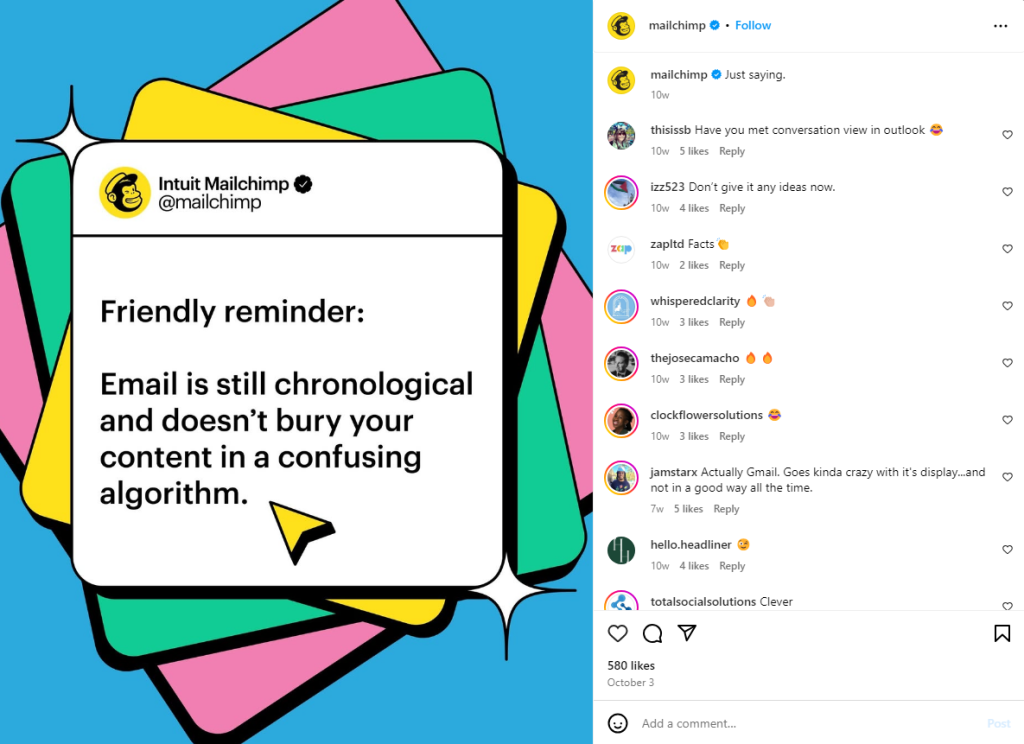
Mailchimp is known for its lighthearted and conversational tone that makes technical subjects like email marketing more approachable. Its quirky yet informative content strategy sets MailChimp apart as a brand that understands the challenges of its target audience while keeping things fun.

Slack

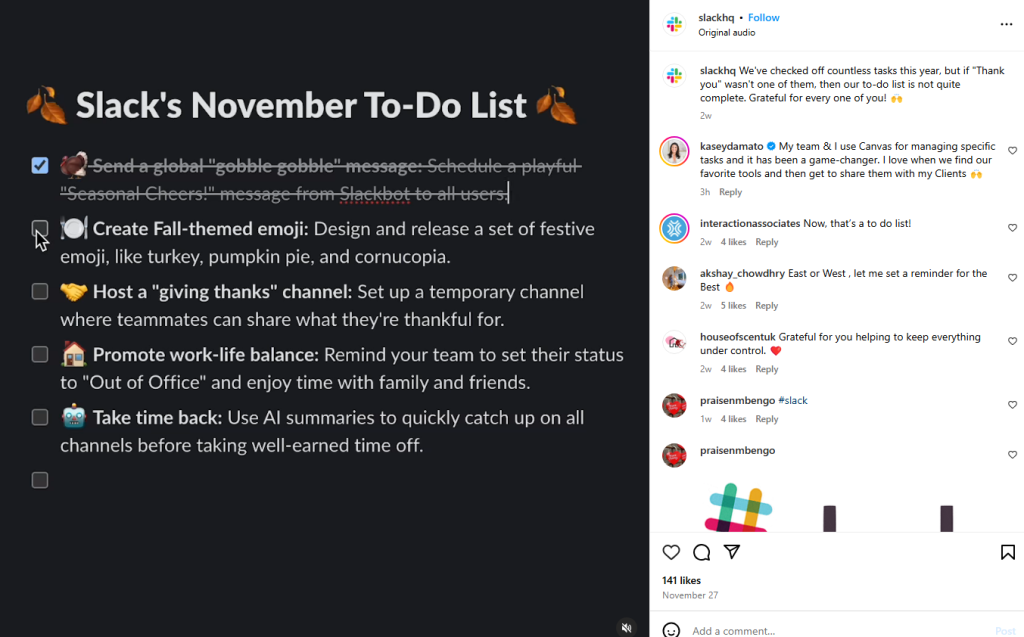
Slack has a unique tone of voice that’s casual, collaborative, and approachable. Designed for workplace communication, its content creation balances humor with professionalism, making it relatable for its audience of white-collar teams and B2B businesses.

Skittles

Skittles is, uh, definitely unique. It’s the king of quirky and irreverent branding, using an absurd and sometimes surreal tone of voice to captivate its customers. Known for its bold and colorful campaigns, Skittles delivers offbeat humor and an element of surprise, often employing a lighthearted tone that showcases its unique personality. This approach isn’t a fit for all brands, but it certainly earned Skittles a lot of attention.

HubSpot

In this tone of voice example, HubSpot’s brand identity is both informative and approachable. HubSpot’s tone of voice is grounded in empowerment and education, designed to guide its target audience through their marketing and sales journeys. While it doesn’t have a formal tone, HubSpot is definitely more serious than brands like Skittles. HubSpot ensures that its content is both accessible and actionable, aligning with its core values of growth and support.

Tips for Maintaining a Consistent Tone of Voice

Choosing a tone of voice for your brand isn’t that hard—the challenge is in the implementation. It takes time for your team to get used to a new tone of voice, but you can ease the transition by following these tips for maintaining a consistent brand tone.

Define Your Target Audience

The preferences of your target audience have a huge impact on your tone of voice. After all, if your target audience is laid-back college students, an uber-formal brand voice would seem pretty odd.

The first rule of content marketing is understanding your audience, which helps you tailor brand messaging so it aligns with your audience’s expectations. If you’re ever unsure about your tone of voice, ask yourself, “Would my audience think this is consistent with my brand?”

Create Tone of Voice Guidelines

The best way to stick with a consistent tone of voice is to create clear tone of voice guidelines for your team. Think of this as a blueprint for all brand messaging, including granular tips on word choice and even punctuation.

Include specific examples of the different tones that your brand uses. That might mean being lighthearted and casual on social media posts but being more buttoned-up when writing case studies.

While it’s important to be thorough, keep your brand guidelines as skimmable as possible. You want employees to treat this as a helpful checklist, not an eye-rolling novel. Make sure everyone has access to it, too. A well-documented voice guide ensures every person in your organization, whether they’re in marketing or IT, knows how to represent your brand identity.

Work With an Experienced Agency

Writing emails, blogs, social posts, and white papers takes a lot of effort. Artfully weaving in your tone of voice is no piece of cake, either. Fortunately, you don’t have to do everything yourself. Collaborating with an experienced agency like MBE Group is a game-changer.

Our team not only helps brands create a unique tone of voice that aligns with their core values, but we also help them execute that content strategy. Put your marketing efforts on Easy Mode without worrying about brand safety.

Follow Quality Control Processes

Look, mistakes can happen, especially if you create content in-house. Your team will probably use the wrong phrase here or there. Still, brand consistency is a big deal, so you don’t want these slip-ups to happen that often. If it’s time to get serious about your tone of voice, create a system of checks and balances.

Ask employees to check each other’s content before it goes live, reviewing everything to ensure it matches your tone of voice guidelines. If you don’t have the time or staff for additional reviews, try automation tools. Many AI platforms can analyze your content and highlight any areas with different tones of voice.

Organize All Marketing Collateral

Like most businesses, you probably have a treasure trove of logo files, graphics, and videos. It’s crucial to clean house when you update your tone of voice. The last thing you want is for the marketing team to share outdated messaging that doesn’t align with the new brand strategy.

Sift through all of your files and remove the team’s access to outdated messaging. You can always archive this information so you have it later. Create clear, shared folders with the proper assets so your team sticks with the right message every time.

Build Better Style Guides With MBE Group

Every person on the planet has a personality and your brand should have one, too. That’s the key to meaningful differentiation, giving consumers in even the most crowded markets a reason to choose you over everyone else.

While this guide has some helpful tone of voice examples to get your creative juices flowing, implementation is just as important. Consistency is key, but between managing your business and having a life, it’s tough for business owners to ensure TOV consistency.That’s where we come in. Trust MBE Group’s SEO and marketing experts to craft your tone of voice guidelines and implement them with ease. It’s the closest thing to cloning yourself. Contact MBE Group to make a splash with your brand.

Do you have a project you need support with? Let's chat.

Get In Touch

ABOUT MBE GROUP

With 40+ years in mobility, tech and consumer goods, we build brands and solve tough challenges through smarter strategies, seamless design and solutions that scale.

SUBSCRIBE TO E-NEWSLETTER

    Built with Kit

    Office

    1441 West Long Lake Rd.
    Suite 330
    Troy, MI 48098

    Do you have a project you need support with?
    Let's chat.

    Get In Touch

    ABOUT MBE GROUP

    With 40+ years in mobility, tech and consumer goods, we build brands and solve tough challenges through smarter strategies, seamless design and solutions that scale.

    SUBSCRIBE TO E-NEWSLETTER

      Built with Kit

      DETROIT HQ

      1441 West Long Lake Rd.
      Suite 330
      Troy, MI 48098

      Copyright ©2026 MBE Group. All rights reserved.

      Privacy Policy

      Copyright ©2026 MBE Group.
      All rights reserved.
      Privacy Policy